TL;DR
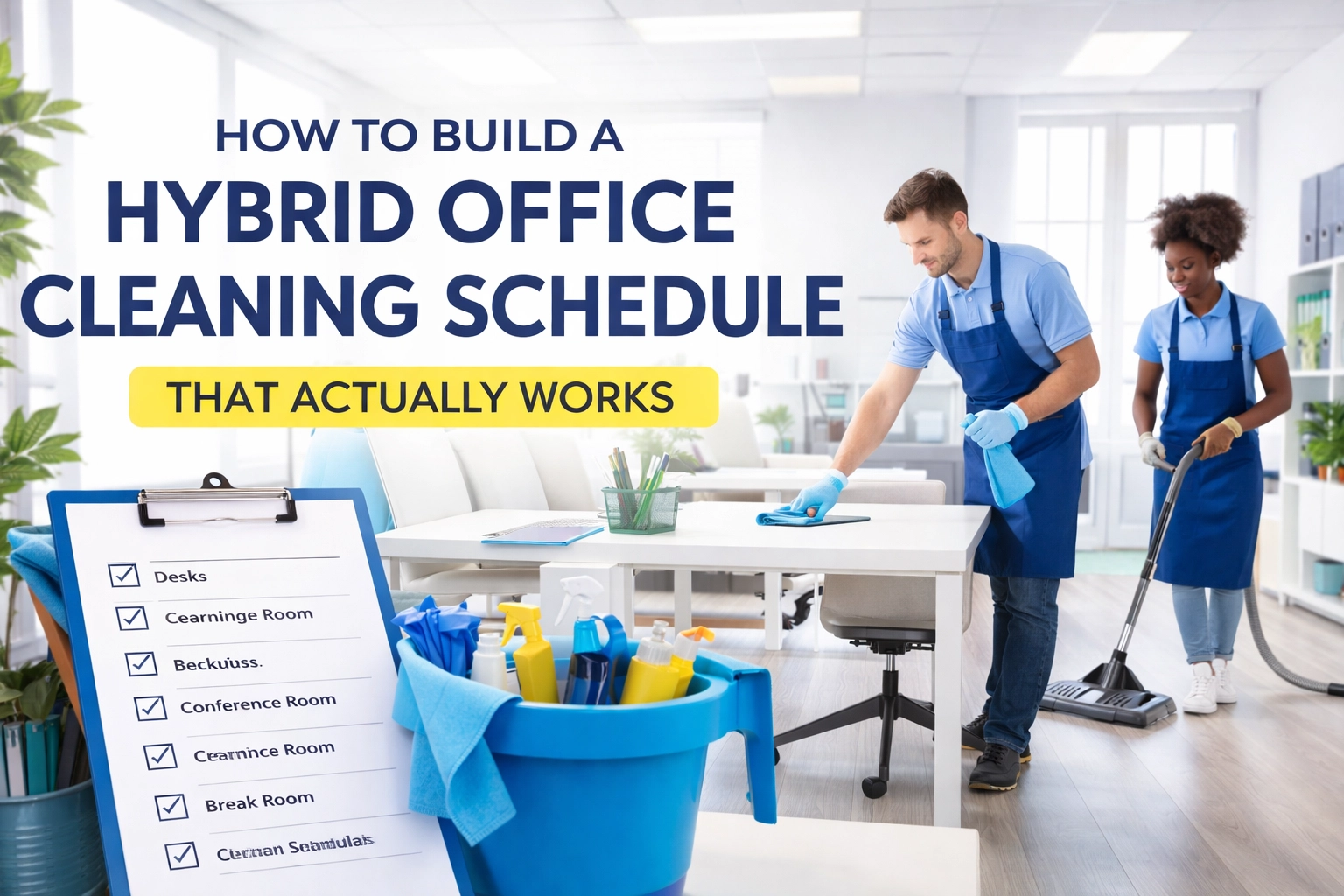
Traditional five-day cleaning schedules don’t make sense when your office is half-empty three days a week. A hybrid cleaning schedule aligns cleaning frequency with actual occupancy: establishing a consistent baseline clean for quiet days while scaling up on peak days when your team anchors in. Focus resources on high-touch zones (shared desks, meeting rooms, breakroom appliances), add midday resets on busy days, and schedule deep cleans based on real usage patterns. The result? Better hygiene when it matters, less waste when it doesn’t, and genuine value for money. At BD365, we build flexible schedules around how your office actually operates: not how it used to.
The Way We Work Has Changed: But Has Your Cleaning Schedule?
Let’s be honest. If your office cleaning schedule looks the same as it did in 2019, there’s a good chance you’re either overpaying or under-cleaning. Possibly both.
Hybrid working has completely transformed how offices function across central Scotland. Where once you had 50 people in five days a week, now you might have 15 on a Monday, 40 on a Tuesday and Wednesday, and a ghost town by Friday afternoon.
The problem? Most cleaning contracts were designed for consistent, predictable occupancy. A fixed five-day schedule made perfect sense when everyone showed up, used the same desks, and filled the breakroom at the same times.
But that world doesn’t exist anymore.
So how do you build a cleaning schedule that actually reflects reality: keeping your workplace hygienic without throwing money at empty floors?

Why Traditional Cleaning Schedules Fall Short
Here’s what typically happens with a fixed cleaning contract in a hybrid office:
- Monday: Light occupancy, but the cleaners come in and do a full clean anyway
- Tuesday/Wednesday: Peak days: everyone’s in, meeting rooms are packed, the kitchen’s a bombsite by 2pm: but cleaning only happens after hours
- Thursday: Moderate use, standard clean
- Friday: Tumbleweeds. Maybe six people in. Full clean anyway.
See the mismatch?
You’re paying for the same service regardless of how the space is actually being used. On quiet days, you’re cleaning surfaces nobody touched. On busy days, you’re playing catch-up: high-touch areas are getting hammered but won’t be cleaned until the evening.
The fix isn’t necessarily more cleaning. It’s smarter cleaning.
Start With a Consistent Baseline
The foundation of any good hybrid schedule is what we call the “core clean”: a baseline that happens every day, no matter the headcount. This prevents your office from slipping into neglect on quieter days while keeping costs sensible.
Your baseline should always cover:
- Rubbish removal from all bins
- Restroom cleaning and sanitising: toilets, sinks, mirrors, restocking supplies
- Breakroom wipe-downs: counters, sink, appliance exteriors
- Vacuuming or mopping main circulation paths: entrances, corridors, lift lobbies
Think of this as the non-negotiables. Even if only a handful of people come in, these areas still get used: and they still need attention.
Scale Up on Your Anchor Days
Now here’s where it gets interesting. On your high-occupancy days: typically Tuesday, Wednesday, and Thursday for most offices: you layer in additional tasks.
These scalable cleans target the areas that take a beating when more people are around:
- Touchpoint boosts: Door handles, lift buttons, shared keyboards, mice, chair arms, light switches
- Midday resets: Restocking soap, paper towels, and sanitiser in restrooms and kitchens when usage doubles
- Meeting room turnovers: Quick wipe-downs between back-to-back bookings
- Hot-desk sanitisation: Clearing and disinfecting shared workstations
This layered approach means you’re not over-cleaning empty spaces on quiet days, but you’re also not leaving your busiest days under-resourced.
Focus Resources on High-Touch Zones
In a hybrid office, the same surfaces get absolutely hammered during occupancy spikes. People aren’t spread evenly across the building: they’re concentrated in shared spaces, meeting rooms, and hot-desking areas.
These high-touch zones need priority attention:
- Shared desks and hot-desks: where multiple people cycle through
- Meeting room tables, chairs, and AV equipment
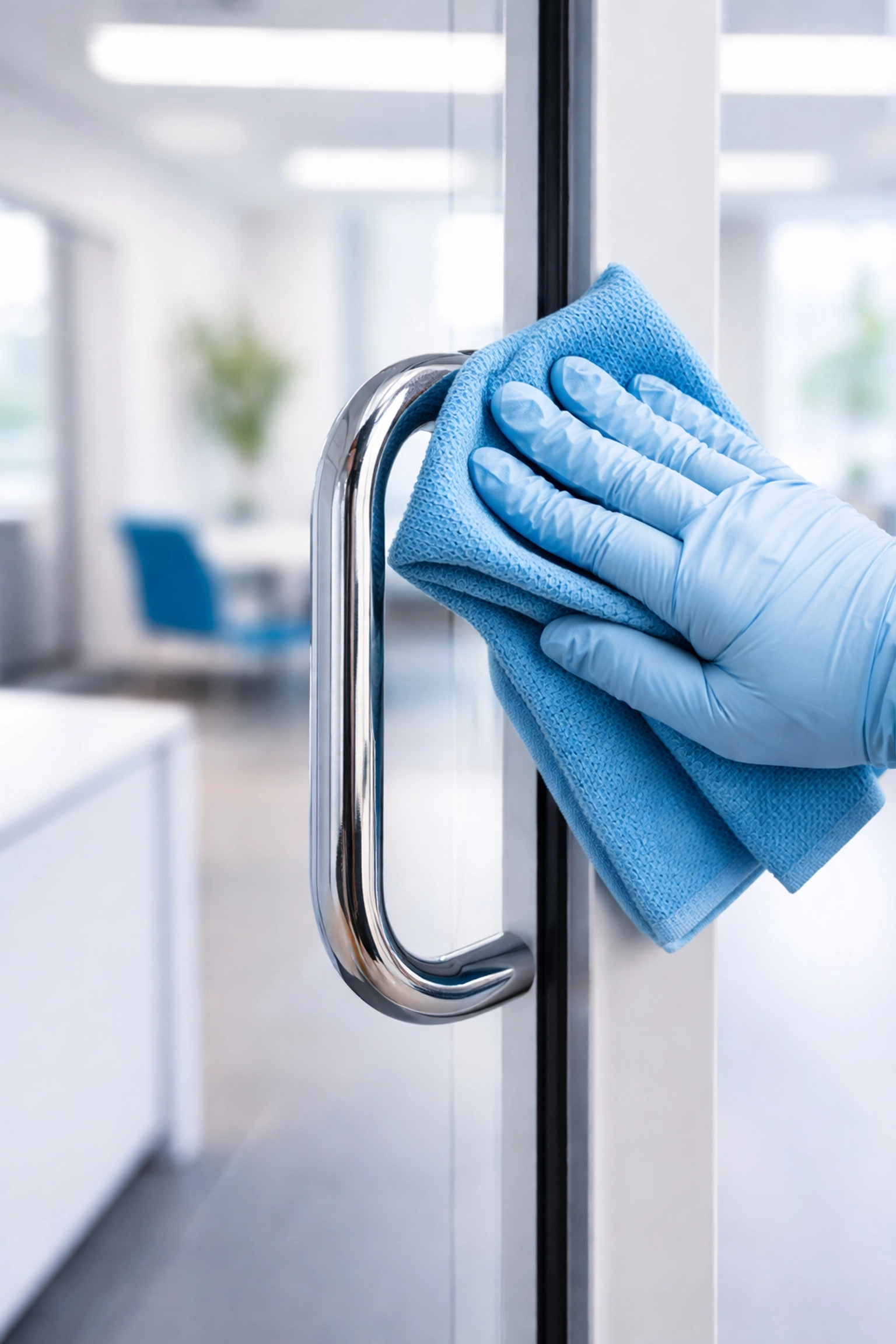
- Door handles throughout the building
- Lift buttons and handrails
- Breakroom appliance handles: kettle, microwave, fridge, coffee machine
- Bathroom fixtures: taps, door handles, flush buttons
On anchor days, these areas should be cleaned at least once daily: with additional disinfection during the day if occupancy is particularly high. It’s about matching effort to actual use, not just ticking boxes on a generic checklist.
Get Your Deep-Cleaning Cadence Right
Daily cleaning keeps things ticking over, but it doesn’t replace the need for periodic deep cleans. The key is matching your deep-clean frequency to real usage patterns rather than arbitrary timescales.
Here’s a sensible framework:
Weekly
- Detail clean meeting room touchpoints
- Descale coffee machines and kettles
- Edge-vacuum carpets along walls and under furniture
Monthly
- Machine-scrub hard floors
- Low-moisture carpet care in high-traffic corridors
- Dust hard-to-reach surfaces, vents, and light fittings
Quarterly
- Upholstery cleaning on soft seating
- HVAC grill cleaning
- Full fridge clear-out (you know it needs it)
The exact schedule depends on your space and how intensively it’s used. An office with 80 people anchoring three days a week needs more frequent deep cleans than one with 20 people popping in occasionally.

Don’t Forget About Air Quality
This one often gets overlooked, but it matters: especially when you’ve got a lot of people packed into meeting rooms on busy days.
Dust, allergens, and stale air can build up quickly in spaces that alternate between heavy use and sitting empty. A few things help:
- HEPA filtration in vacuum cleaners to capture fine particles
- Increased HVAC runtime before peak occupancy days to circulate fresh air
- Regular carpet extraction to remove embedded dust and allergens
- Attention to under-desk areas where cables and dust bunnies congregate
Good air quality isn’t just about comfort: it affects concentration, wellbeing, and how professional your space feels to visitors.
Getting Genuine Value for Money
Here’s the thing. A well-designed hybrid cleaning schedule isn’t about spending less on cleaning. It’s about spending smarter.
You should be paying for:
- Consistent baseline hygiene every day
- Scaled-up service when your team is actually in
- Targeted attention on high-touch and high-traffic zones
- Deep cleans that match real usage, not arbitrary calendars
You shouldn’t be paying for:
- Full cleans on near-empty floors
- Rigid schedules that don’t flex with your operations
- Cleaning teams who don’t know which days are busy
- Tasks quietly dropped because “nobody will notice”
The difference between a cleaning contract that works and one that doesn’t often comes down to communication and flexibility. Your provider needs to understand your occupancy patterns: and be willing to adapt when those patterns change.
How BD365 Builds Flexible Schedules That Actually Work
At BD365, we work with offices across central Scotland that have moved to hybrid models: and we’ve seen firsthand how one-size-fits-all schedules fall apart.
That’s why we build cleaning programmes around how your space is actually used:
- We start by understanding your occupancy patterns: which days are busy, which are quiet, how that might change seasonally
- We establish a baseline that keeps standards consistent without wasting resources
- We scale up on anchor days with additional touchpoint cleaning and midday resets
- We stay flexible as your working patterns evolve
No rigid contracts that lock you into services you don’t need. No radio silence when you need to adjust the schedule. Just reliable, professional cleaning that matches reality.
If your current cleaning arrangement isn’t keeping pace with how your office actually operates, we’d be happy to chat through what a smarter schedule could look like.
Quick Recap: Building a Hybrid Cleaning Schedule
- Establish a daily baseline covering bins, restrooms, breakrooms, and main walkways
- Layer scalable tasks on high-occupancy days: touchpoint boosts, midday resets, hot-desk sanitisation
- Prioritise high-touch zones like shared desks, meeting rooms, and door handles
- Match deep-cleaning frequency to actual usage patterns
- Don’t overlook air quality: filtration and regular carpet care make a real difference
- Work with a provider who understands flexibility and adapts to your needs
Hybrid working isn’t going away. Your cleaning schedule should reflect that.