TL;DR
Choosing industrial cleaning services isn’t the same as picking an office cleaner. Factory floors, engineering workshops, and manufacturing sites across central Scotland have unique demands: think heavy machinery, safety compliance, hazardous substances, and production schedules that can’t be interrupted. Before you sign any contract, you need to understand what separates a genuine industrial cleaning provider from a general commercial cleaner who’s out of their depth. This guide covers the 10 essential things every facilities manager should know before hiring industrial cleaning services.
Why Industrial Cleaning Is a Different Beast Entirely
Let’s be honest: if you’re running a manufacturing plant, warehouse, or engineering facility, you already know that a mop and bucket won’t cut it. But you’d be surprised how many cleaning companies pitch for industrial contracts without truly understanding what’s involved.
Industrial cleaning isn’t just “bigger” cleaning. It’s a completely different discipline that requires specialist knowledge, equipment, and training. We’re talking about environments where health and safety isn’t just a nice-to-have: it’s legally mandated and potentially life-saving.
So, whether you’re based in Falkirk, Stirling, Glasgow, or anywhere else in central Scotland, here are the 10 things you absolutely need to know before choosing an industrial cleaning provider.
1. Industrial Cleaning Requires Specialist Training
Your average office cleaner knows how to empty bins, vacuum carpets, and wipe down desks. That’s valuable work: but it’s worlds apart from what’s needed on a factory floor.
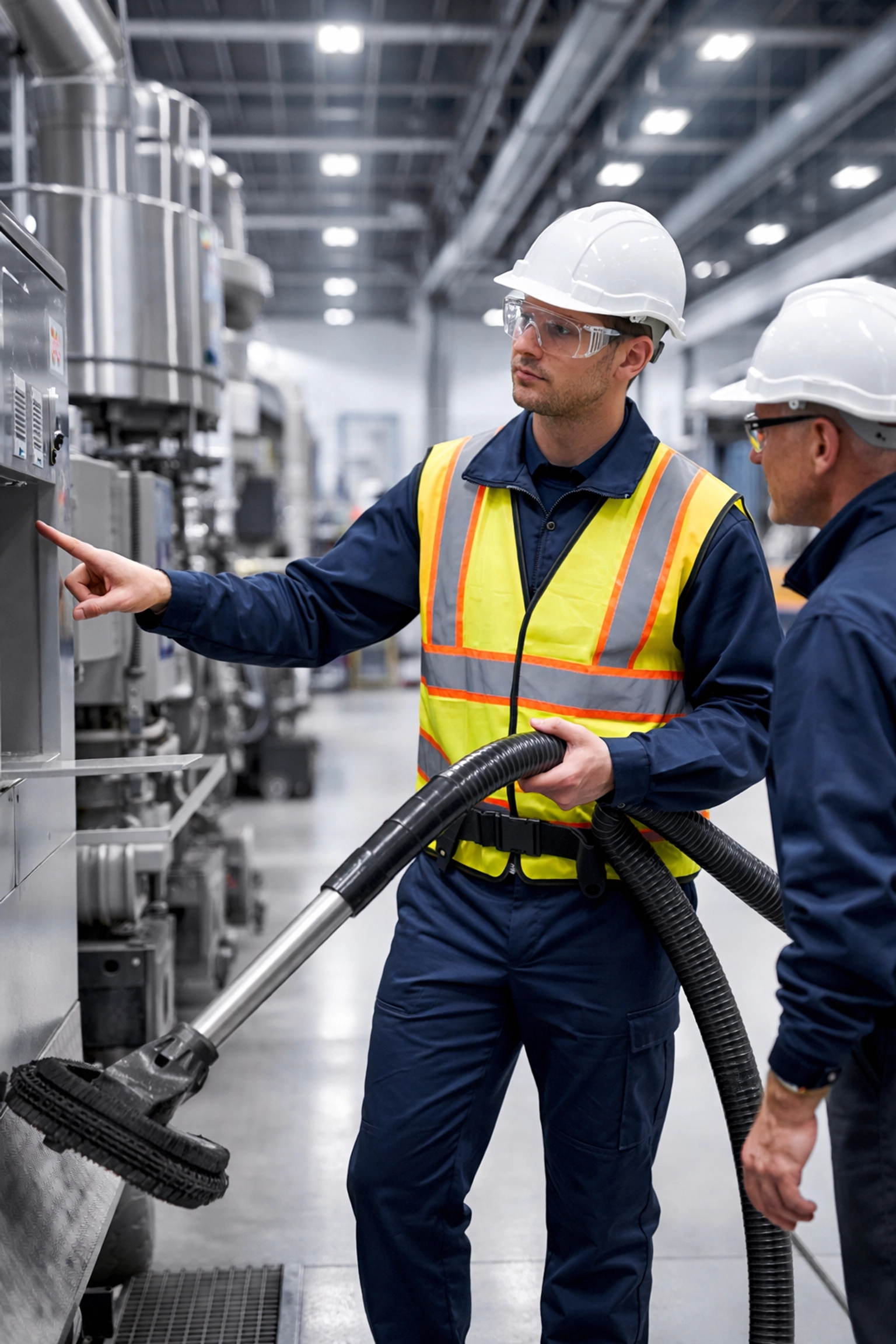
Industrial cleaners need to understand:
- Safe working procedures around heavy machinery
- COSHH regulations and hazardous substance handling
- Cross-contamination prevention
- Working at height protocols
- Site-specific security requirements
At BD365, our teams are trained specifically for industrial environments. We don’t send office cleaners to do an industrial job: we send people who understand the risks and respect the environment they’re working in.
2. Safety Compliance Isn’t Optional
Manufacturing and engineering sites in Scotland must comply with strict health and safety regulations. This includes everything from OSHA-equivalent standards to industry-specific requirements.
A proper industrial cleaning company helps you stay compliant: not just by cleaning, but by understanding which regulations apply to your facility and ensuring their methods support your obligations.
Think about it: if a cleaning contractor causes an incident because they weren’t properly trained, who’s liable? The answer might surprise you: and not in a good way.
3. The Equipment Is Completely Different
Most industrial facilities house large machinery, complex equipment, and surfaces that traditional cleaning methods simply can’t handle. You need specialist kit:
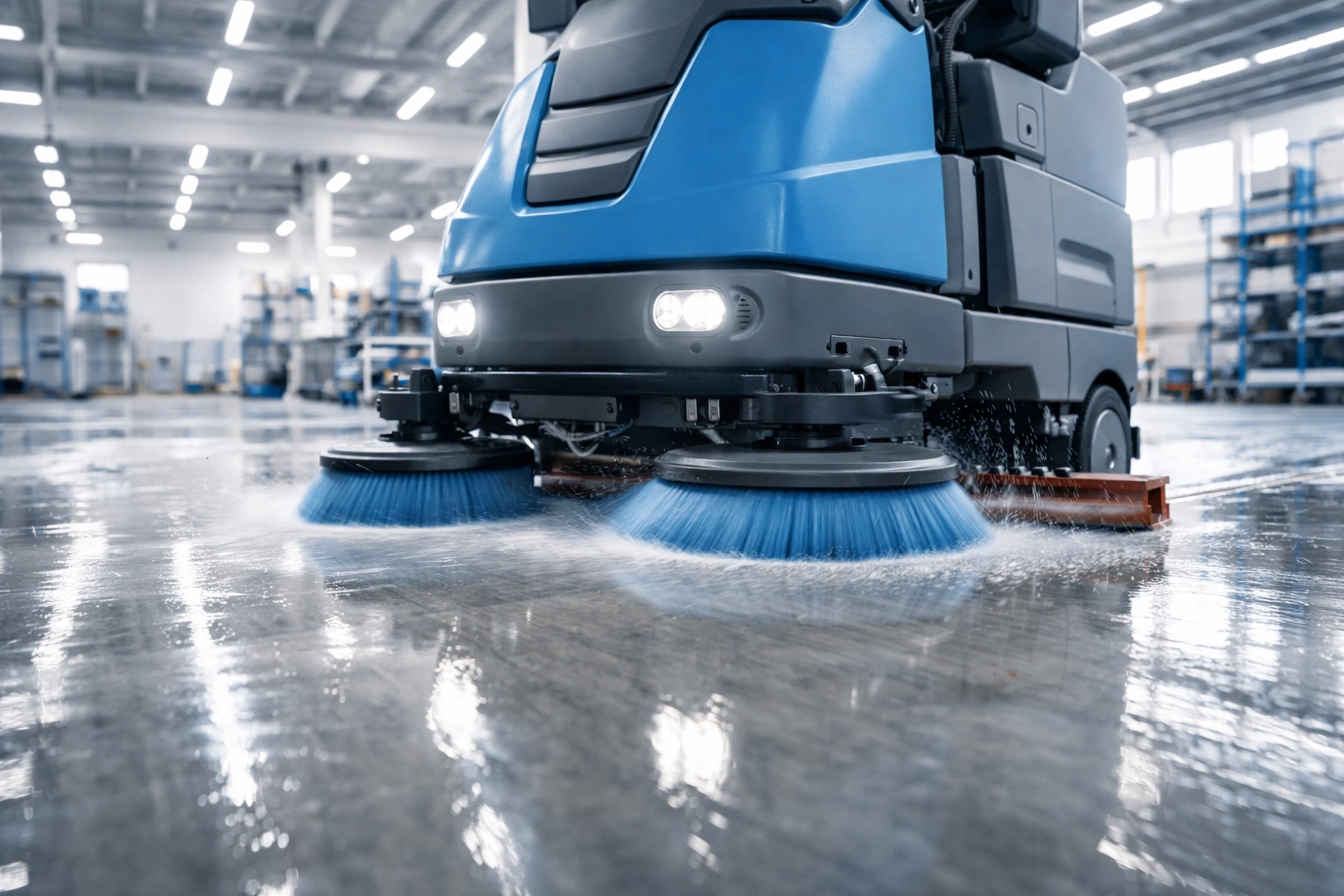
- Industrial floor scrubbers and polishers
- Pressure washers and steam cleaning systems
- HEPA-filtered vacuum systems for dust control
- Degreasing equipment for machinery
- High-level access equipment for overhead cleaning
A cleaning company that turns up with domestic equipment isn’t equipped for the job. Full stop.
4. Scheduling Around Production Is Non-Negotiable
Here’s something that separates industrial cleaning from office cleaning: your production line doesn’t stop because the cleaners are in.
A good industrial cleaning provider works around your operational schedule: whether that means early mornings, late nights, weekends, or working section by section during quieter periods. The goal is zero disruption to your output.
At BD365, we build cleaning schedules that fit your production reality, not the other way around. We understand that downtime costs money, and we plan accordingly.
5. High-Level Cleaning Demands Specialist Access
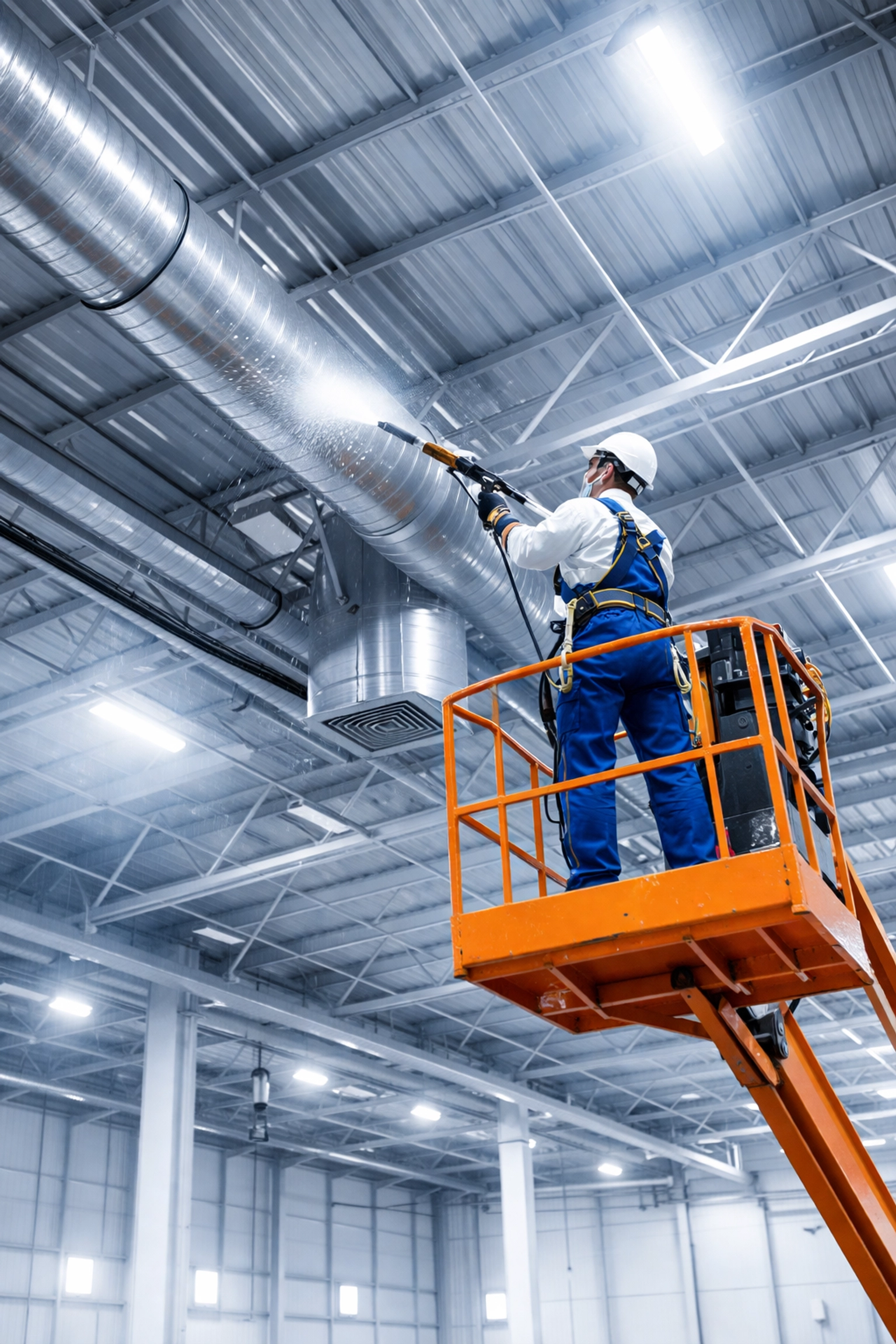
Factories and warehouses have height. Lots of it. Overhead gantries, racking systems, ductwork, ceiling-mounted equipment: all of it accumulates dust, debris, and sometimes hazardous residue.
High-level cleaning requires:
- Trained operatives certified for working at height
- Proper access equipment (cherry pickers, scaffolding, MEWPS)
- Risk assessments specific to each area
- Coordination with your site safety team
This isn’t something you can wing. If a provider can’t demonstrate their high-level cleaning capabilities and certifications, walk away.
6. Chemical Selection Actually Matters
Industrial environments often require heavy-duty cleaning agents: degreasers, sanitisers, and specialist products designed for specific surfaces and contaminants. But here’s the thing: using the wrong chemicals can damage machinery, create safety hazards, or leave residues that affect your products.
Professional industrial cleaners know which products to use where. They’ll also increasingly offer eco-friendly alternatives that are effective without being harmful to people or the environment.
We’re always happy to discuss chemical specifications with your health and safety team. Transparency matters.
7. Machinery Cleaning Needs a Gentle Touch (and Expertise)
Cleaning around: and sometimes on: expensive manufacturing equipment isn’t something you trust to just anyone. One wrong move can cause damage that costs thousands to repair and days of lost production.
Industrial cleaning teams need to understand:
- Which parts of machinery can be cleaned and which can’t
- How to avoid interfering with calibration or settings
- Lockout/tagout procedures
- The difference between surface cleaning and deep degreasing
This is specialist work. Make sure your provider treats it that way.
8. Documentation and Reporting Should Be Standard
When you’re managing an industrial facility, you need records. Cleaning logs, compliance certificates, risk assessments, method statements: all of it matters for audits, inspections, and your own peace of mind.
A professional industrial cleaning company provides documentation as standard. If a provider can’t give you clear reporting on what’s been done, when, and by whom, that’s a red flag.
At BD365, we provide detailed reporting that supports your compliance requirements and gives you full visibility of the work being done across your site.
9. Cover and Consistency Are Critical
Industrial cleaning isn’t a “nice to have”: it’s essential for safety, compliance, and operational efficiency. That means you can’t afford missed cleans or inconsistent standards depending on who turns up.
Before signing any contract, ask:
- What happens if our regular cleaner is sick?
- Do you have backup teams trained for our site?
- How do you ensure consistent standards across shifts?
If the answers are vague, expect problems down the line.
10. Local Knowledge and Response Times Matter
If you’re running a facility in central Scotland: whether that’s a manufacturing plant in Cumbernauld, an engineering workshop in Livingston, or a warehouse near Glasgow: you need a cleaning provider who can actually get to you quickly when needed.
National contracts with distant head offices often mean slow response times and generic service. A provider with local presence understands the area, can respond to urgent requests, and builds genuine relationships with your site team.
BD365 is based in central Scotland and serves industrial clients across the region. We’re not a faceless national chain: we’re your neighbours, and we’re invested in getting it right.

The Bottom Line
Choosing industrial cleaning services is a decision that affects your safety compliance, operational efficiency, and bottom line. It’s not something to hand to the lowest bidder without due diligence.
Here’s a quick checklist before you commit:
- Specialist training – Are their teams qualified for industrial environments?
- Proper equipment – Do they have industrial-grade kit?
- Flexible scheduling – Will they work around your production?
- High-level capability – Can they safely clean at height?
- Compliance support – Do they understand your regulatory obligations?
- Reliable cover – What happens when someone’s off sick?
- Local presence – Can they respond quickly when you need them?
If you’re looking for industrial cleaning services in central Scotland that actually understand what manufacturing, engineering, and warehouse environments require, we’d love to have a conversation.
No pressure, no hard sell: just a straightforward chat about what you need and whether we’re the right fit.